
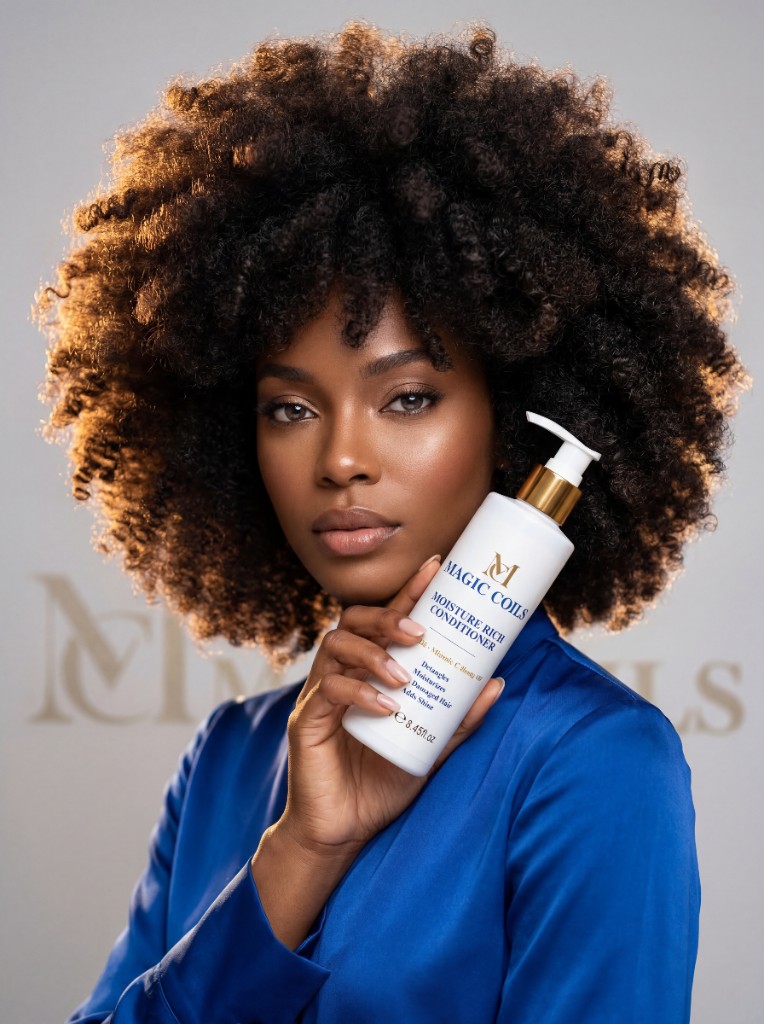
Big Chop Recovery: Building Length in the First Year
Month-by-month guide to the first year after a big chop. What length to expect, what to do at each stage, and the products that protect new growth from breakage.
The big chop is the most efficient way to start a natural hair journey, and the most overwhelming. One day you have shoulder-length relaxed hair; the next day you have a half-inch of texture you've literally never met before. The first year is when most people quit. This guide is the roadmap for the people who don't.
What "big chop" actually does to your scalp and follicles
Before getting into the routine, a quick reality check. Cutting hair doesn't make it grow faster — that's a myth. What the big chop actually does is remove damaged length so that new growth has zero competition for the nutrients your follicles deliver. The hair you grow after the chop is uncompromised by years of chemical processing, heat damage, and dryness from products that were never meant for your texture.
Your scalp doesn't need to "recover" from a big chop — there's nothing to recover from. But your routine needs to recover from years of habits built around hair that no longer exists.
Month 1: The shock month
Expected length: 1/2 to 1 inch unstretched, depending on starting point.
What's happening: Your scalp is producing oils for hair you no longer have. The natural oils that used to travel down 8 inches of strand are now pooling at the roots. Your scalp may feel oilier than it has in years.
What to do:
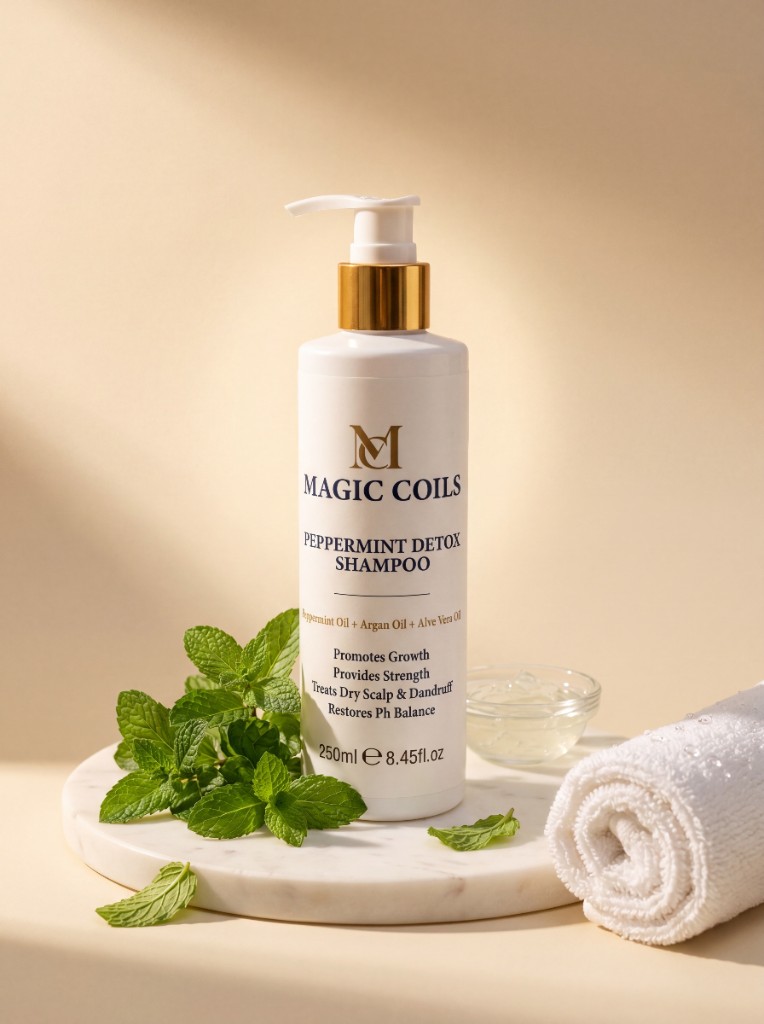
- Wash 2x per week with Peppermint Detox Shampoo. The peppermint manages the oil while the tea tree keeps your scalp balanced as it adjusts.
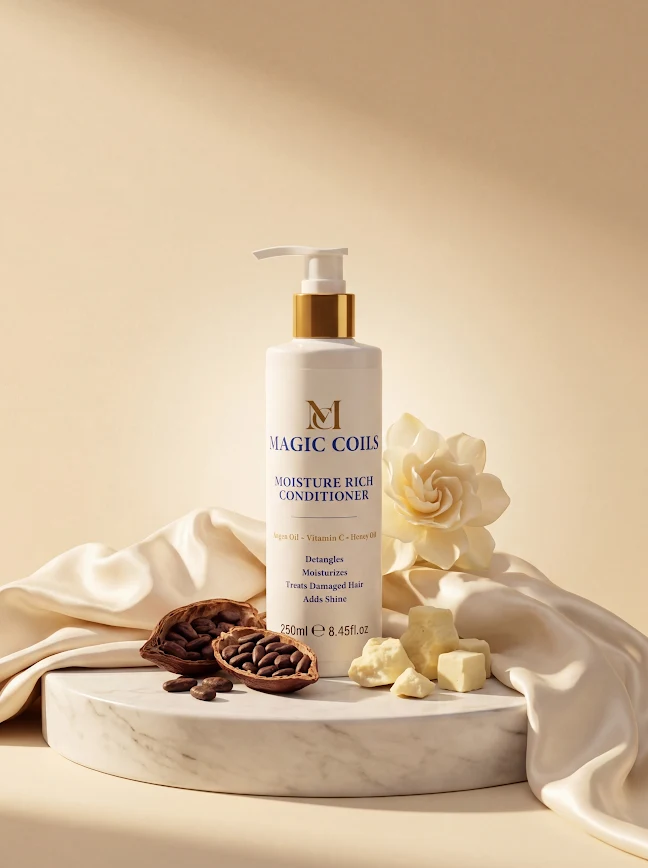
- Condition with Moisture Rich Conditioner — you don't need to detangle (too short to tangle), but the conditioner helps your strands transition out of chemical-processing residue.
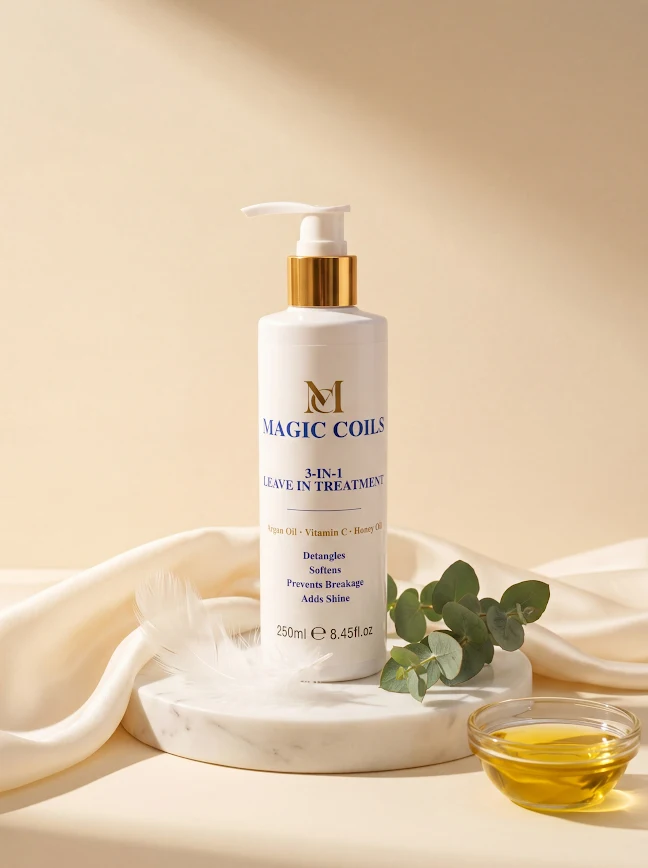
- Style with just 3-In-1 Leave In Treatment patted into damp hair. That's it. Resist the urge to layer.
- Protect with a satin bonnet or pillowcase every single night, even though there's almost nothing to protect. The habit needs to be muscle memory by month 3.
What NOT to do: Don't trim. Don't deep condition (too short to benefit). Don't apply heavy creams or gels. Don't pull at your hair trying to make it lay differently.
Month 2-3: Pattern emerges
Expected length: 1.5 to 2.5 inches unstretched.
What's happening: Your true curl pattern starts showing up. Many women see a tighter pattern than they had in childhood — chemical processing permanently alters pattern memory, and post-chop pattern is your true texture, which can be a surprise.
If you don't know your pattern yet, read our curl pattern identification guide and figure it out. The routine you'll need for the next 9 months depends on this.
What to do:
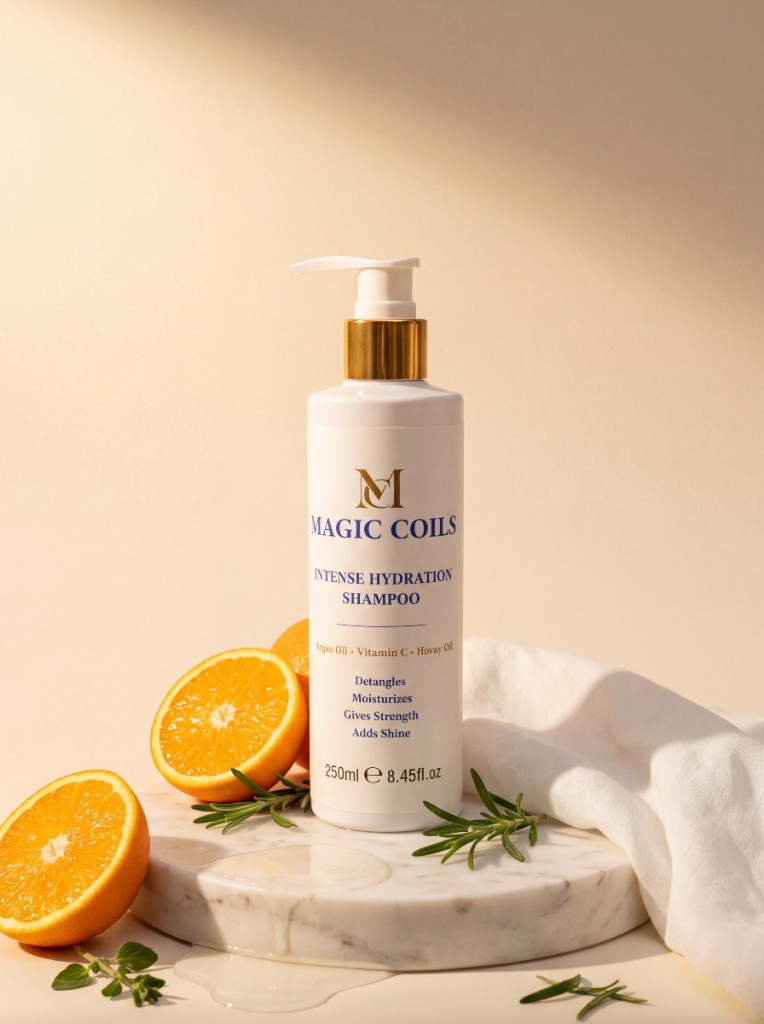
- Continue weekly washes, alternating Peppermint Detox and Intense Hydration Shampoo
- Start a weekly deep conditioning session — apply Moisture Rich Conditioner generously, cover with a plastic cap, sit for 20 minutes (with body heat) before rinsing
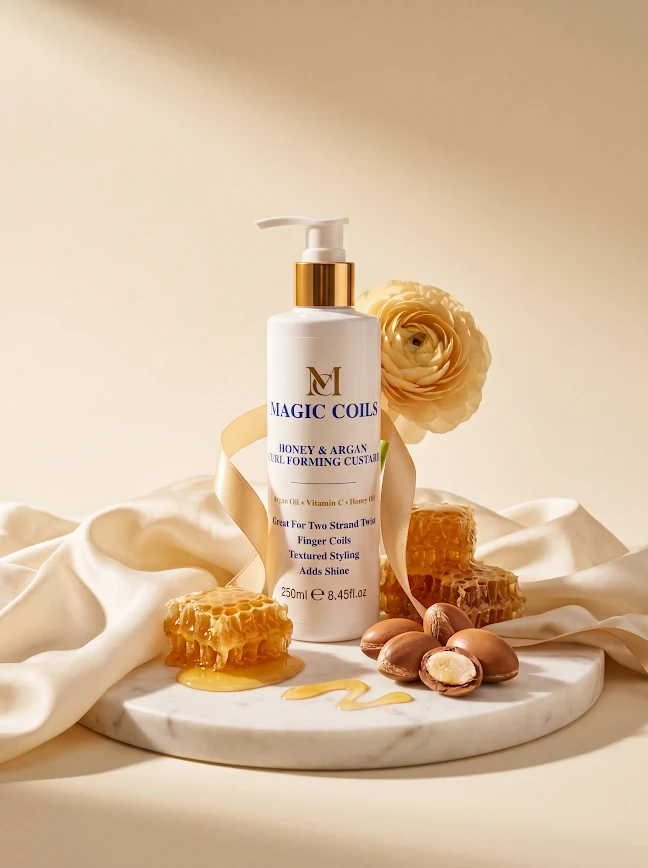
- Begin layering: 3-In-1 Leave In Treatment on soaking-wet hair, then a small amount of Honey & Argan Curl Custard to start defining the pattern
- Try a wash-and-go — even a half-inch TWA can have visible coil definition. This is when many women fall in love with their texture for the first time.
Month 4-6: First trim, first style
Expected length: 3 to 4 inches unstretched.
What's happening: Length is becoming visible. Hair is long enough to grab. Curl pattern is fully established. This is when the routine that will carry you for the rest of the year locks in.
What to do:
- First trim between month 4 and month 6 — find a stylist who specializes in natural hair. Look at our Stylist Directory for Magic Coils-certified professionals. The trim should be small (under 1/4 inch) and only to even out ends, not to "shape."
- Try your first protective style — flat twists, two-strand twists, or a twist-out. The full Magic Coils Two Strand Twist routine (coming soon to Curl Talk) walks through this.
- Add overnight refreshing. Spritz with water + a tiny bit of 3-In-1 Leave In Treatment in a spray bottle each morning. This is the daily habit that makes wash-and-gos last 5+ days instead of 2.
Month 7-9: The plateau month
Expected length: 4 to 5 inches unstretched, 5-7 inches stretched.
What's happening: Growth feels like it slowed down. It didn't — you've adjusted to seeing growth, so the same monthly progress now feels less dramatic. Many people quit their routine in this phase because they "stop seeing results." Don't.
What to do:
- Take a stretched length photo at month 6 and another at month 9. The difference will surprise you. The mirror lies; the camera doesn't.
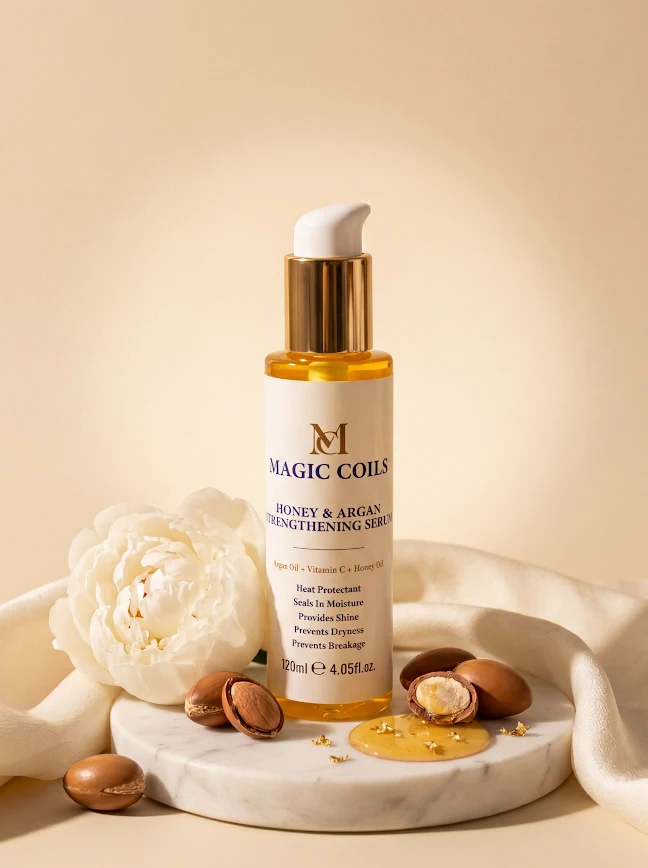
- Add the Strengthening Serum to your routine if you haven't yet. As length increases, ends become more prone to breakage. The serum's argan + vitamin C combination seals cuticles and protects against day-to-day wear.
- Stop tugging at your edges. Edge tension is the #1 cause of hairline thinning in year-one naturals. Protective styles that pull on the temples are doing damage you'll see by year three.
Month 10-12: Length retention vs. length growth
Expected length: 5 to 6 inches unstretched, 7-9 inches stretched.
What's happening: Your routine is becoming second nature. Your hair has memorized the products. The conversation shifts from "how do I grow it?" to "how do I keep what I grew?"
What to do:
- Stretch styles become your friend. Bantu knots, twist-outs, braid-outs all extend visible length while protecting from manipulation.
- Switch to bi-weekly deep conditioning. Your hair has built up enough internal hydration that weekly is overkill now.
- Plan your year-end transformation photo. Side-by-side with your day-of-big-chop photo. This is the moment most naturals realize what they accomplished.
The products that handle the full year
Through all 12 months, the four products that do the bulk of the work:
- Peppermint Detox Shampoo — scalp reset weekly
- Intense Hydration Shampoo — gentle cleanse on alternate weeks
- Moisture Rich Conditioner — your detangler and deep conditioner
- 3-In-1 Leave In Treatment — daily and weekly moisture lock
By month 4, you'll likely add:
- Honey & Argan Curl Custard — definition
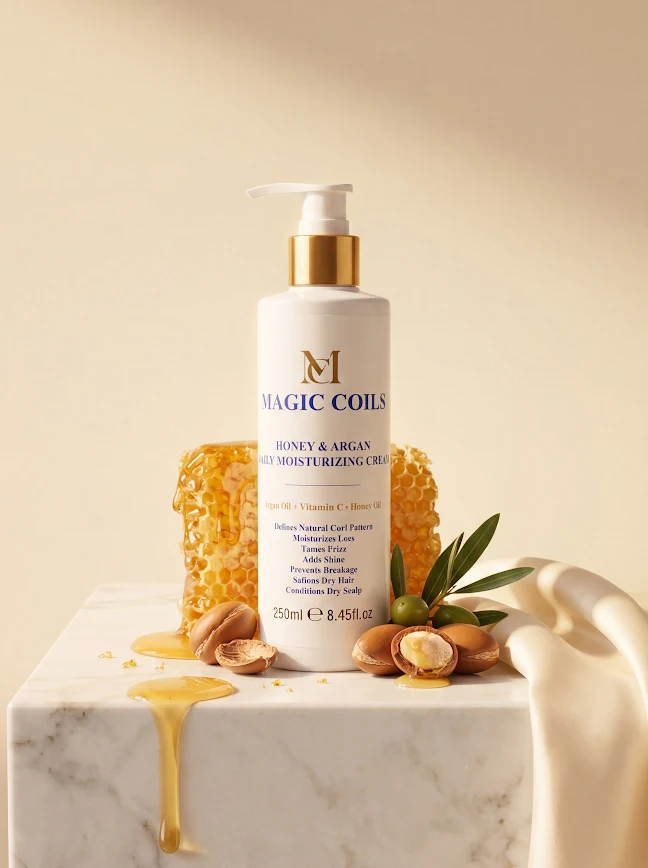
- Moisturizing Cream — daily refresh and seal
- Strengthening Serum — heat protection + shine
The whole stack is available as the Full Routine Bundle — saves about $25 vs. buying individually, and you have everything you need for the full year-one journey in one purchase.
The hardest part nobody talks about
The hardest part of the first year isn't styling or growth. It's seeing yourself with completely different hair for the first time. Many women feel less like themselves for the first 3-6 months. Some cry. Some go back to extensions or relaxers.
The women who get through it almost universally describe month 8-9 as the turning point — when their hair feels like theirs again, not like a wig they're wearing on top of their old identity. There's no shortcut through that emotional curve. There's just trusting that it's a curve and not a permanent state.
If you're in month 2 right now and considering quitting: don't. Month 8 is closer than you think.
Want a routine personalized to your specific stage?
Take our 60-second Hair Quiz — tell us your texture, your goal, and how you currently style. We'll send a routine sized to where you actually are in the journey, not a generic "natural hair starter pack."
And if you want updates as your hair changes month to month, subscribe at the bottom of any page. We send monthly check-ins specifically for the first-year journey — written, again, by people who've been through it.
This guide reflects the experience of the Magic Coils community across hundreds of post-big-chop journeys. Individual growth rates vary based on genetics, health, and climate. Average rates referenced (1/2 inch per month) come from peer-reviewed dermatology literature on human scalp hair growth. If your growth feels significantly slower than the timeline above, talk to a doctor — sometimes nutritional or thyroid issues are the actual root cause.
Frequently Asked Questions
How much hair grows in a year after a big chop?
The scalp average is 6 inches of growth per year, but Black natural hair often appears to grow slower because shrinkage hides up to 75% of actual length. By month 12, most people see 4-6 inches of stretched length, which translates to 1-3 inches of unstretched visible length. The hair IS growing — shrinkage just hides it.
Should I trim my hair after a big chop?
Wait until at least month 4-6 before your first trim. The first few months are about establishing a healthy routine; trimming too early sets you back. After month 6, light dustings (less than 1/4 inch) every 3 months is the standard for retaining length.
Why is my new growth so dry?
Two reasons. First, post-big-chop hair has shorter exposed strands where natural scalp oils haven't had time to travel down. Second, the new growth pattern at your roots may be tighter than what you had before, which makes the strand structure naturally drier. The 3-in-1 Leave-In and Moisturizing Cream layered together solve both.
Can I wear protective styles right after the big chop?
Yes, but with restraint. Loose styles like puff buns, braid-outs, and twist-outs are fine immediately. Heavy braids, sew-ins, or tight extensions should wait until month 3 or beyond — the tension on still-recovering hair can cause traction alopecia at the temples and edges.
How often should I deep condition after a big chop?
Weekly for the first 3 months — this is when your hair is rebuilding moisture habits. After month 3, drop to bi-weekly. After month 6, once-monthly maintenance unless you're heat-styling or living somewhere with extreme weather (very dry winters, very humid summers both stress hair).
Products from this routine
Find your perfect routine
Take our 60-second Hair Quiz and get a personalized product routine built for your texture and goals.
Take the Hair Quiz